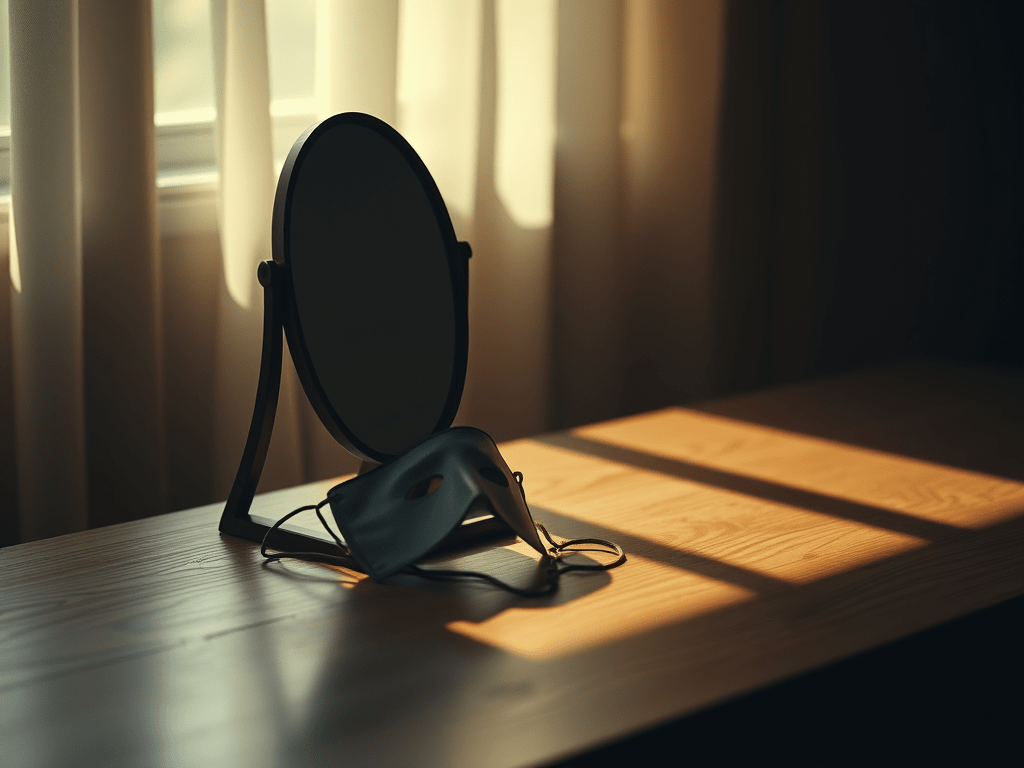
It’s Halloween — a time for costumes, makeup, and masks.
But some masks aren’t made of fabric or plastic.
Some are invisible — the ones we wear every day, to hide the parts of ourselves we think are too much, too messy, or too hard to explain.
We all have them. The “I’m okay” smiles, the busy schedules, the constant positivity. These masks protect us — but sometimes, they make it harder for us to heal or be fully seen.
What Is Emotional Masking?
Emotional masking happens when we hide our real feelings to appear okay.
It’s how we say “I’m fine” when we’re actually falling apart, or how we distract ourselves with humor or productivity instead of sitting with what’s really going on.
It’s not about being fake — it’s about survival. But over time, masking can make us feel disconnected from ourselves and others.
The “I’m Fine” Mask
How many times have you said “I’m fine” when, in reality, you weren’t?
It protects you from questions or pity — but pretending to be fine can quietly drain you. You end up carrying the weight of everything alone.
The Humor Mask
Jokes, sarcasm, and playful banter can lighten the room — but sometimes laughter hides tears and becomes a shield.
You stay funny to stay safe — because it’s easier to make people laugh than to let them see your pain.
The Productivity Mask
Staying busy feels productive — even healing. Checking tasks off, being “efficient,” and overloading our schedules makes us feel in control.
But when productivity/ busyness becomes a mask, it’s a way to avoid slowing down. You check every box, meet every deadline, but never check in with yourself
The Positivity Mask
“Look on the bright side.” “Stay positive!”
We’ve all said it — to ourselves or others.
But forced positivity can silence real emotions. It teaches us to smile through sadness, instead of feeling and releasing it.
Taking Off the Mask
Removing a mask doesn’t make you weak. It makes you real.
Healing starts when you show up as your whole self — not the version you think others will accept, but the one that’s honest and human.
Some masks protect you, some hide you, and some may even haunt you if left unchecked.
This season, take a quiet moment and ask yourself:
- Which masks am I wearing?
- Which ones could I gently put down?
How to Gently Unmask
- Check In With Yourself
- Notice what emotions you’ve been pushing away. Name them — without judgment.
- Express What’s True
- Write, draw, talk, cry — let your feelings take shape instead of staying buried.
- Seek Safe Spaces
- Share honestly with someone you trust — a friend, a loved one, or a therapist.
- Set Boundaries
- You don’t need to reveal everything at once. Unmasking is a process, not a performance.
Masks aren’t always a bad thing — they can protect us until we’re ready.
But eventually, healing asks for honesty.
This season, give yourself permission to take one off — even just for a moment.
Let yourself breathe. Let yourself be seen.
Unmasking isn’t about exposure — it’s about connection.
Vibe Check Practice
Corlissa Seah, Counsellor & Founder of Vibe Check Practice
Providing online therapy to support mental health and well-being
Book an appointment with us using this link!
 Vibe Check Practice
Leave a comment